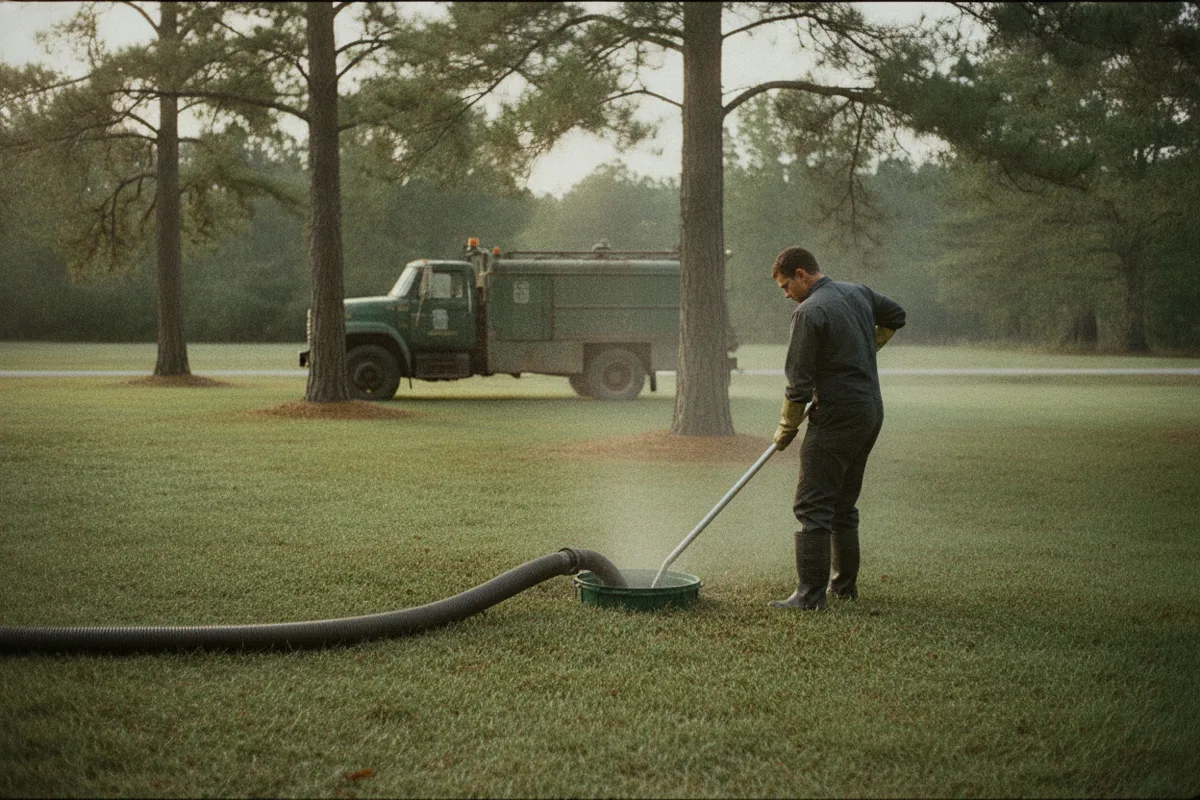
What is the difference between septic tank pumping and cleaning?
Every septic tank holds three layers. Grease and paper float on top as scum. Water sits in the middle. Sand, grit and settled solids pack down on the bottom as sludge.
Pumping removes the liquid and whatever floats out with it. Cleaning removes all three layers, including the packed sludge that will not budge until it is loosened with water and agitation.
The difference shows up two years later. A cleaned tank starts its next cycle with an empty floor. A skimmed tank starts with a foot of hardened solids that never left, so it fills faster and pushes material toward the outlet sooner.
Full sludge removal is that difference. If nobody broke the bottom layer loose and hauled it out, the tank was pumped, not cleaned.
Most homeowners never have to choose between the two. Ask for the sludge depth reading during your regular pump out visits and the number decides for you.
What is involved in septic tank cleaning? Enterprise AL basics
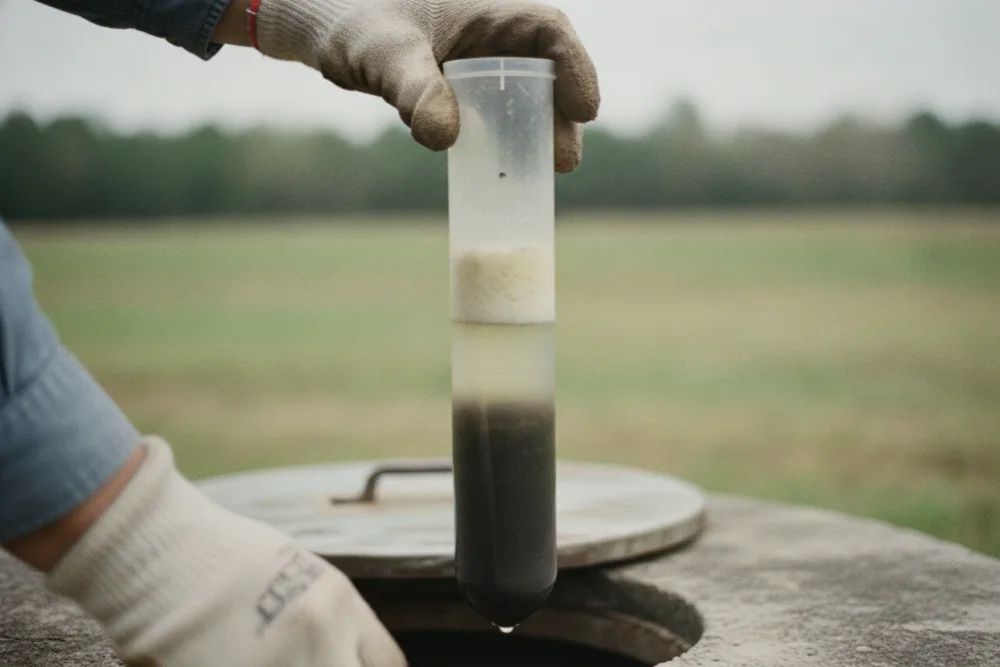
A septic tank cleaning visit in Enterprise, AL 36330 follows a set order, and every step of the sludge removal is there for a reason.
The septic tank cleaning steps, in order
- Locate and uncover both lids. Two compartment tanks are common on newer Coffee County permits, and the second compartment gets cleaned too.
- Measure sludge and scum before anything is removed, so there is a record of how the system is trending.
- Vacuum the liquid down, then back flush clean water against the bottom to break the sludge loose and pull it out.
- Wash down the walls and the inlet and outlet tees so nothing stays crusted in place.
- Inspect the baffles, the concrete and the effluent filter while the tank is empty and everything is visible.
- Reseat the lids, note the condition of the tank, and set a target date for the next service.
An empty tank is the only chance anybody gets to look inside your system without digging up the yard. A good crew uses it.
How do you know your tank needs more than a quick pump?
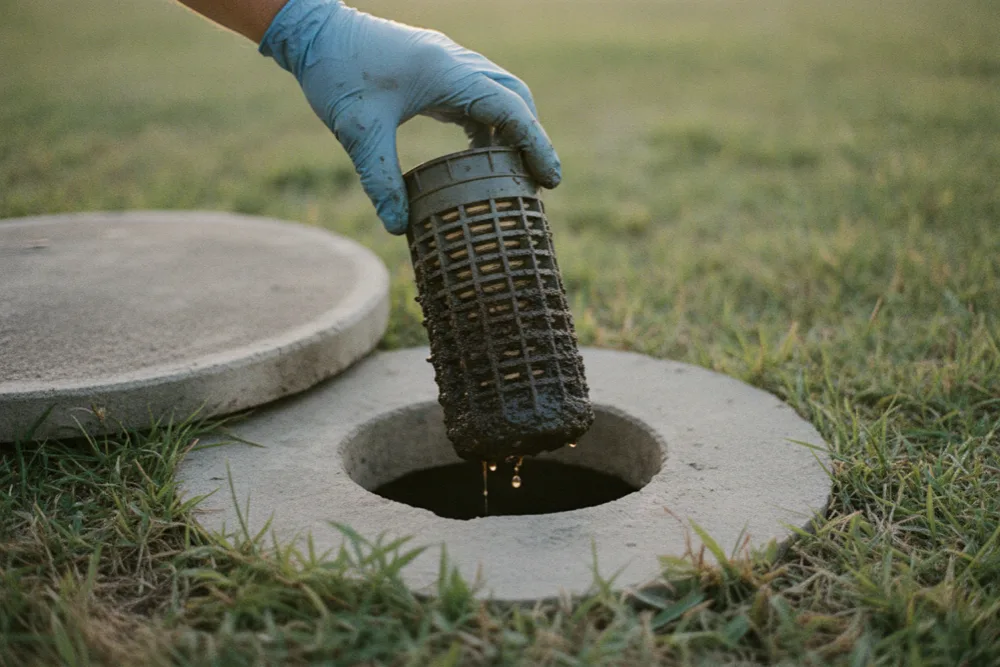
Watch for backups that return within a few months of a pump out, an effluent filter that clogs over and over, sewage odor near the tank, or solids showing at the outlet. Those are sludge symptoms, not volume symptoms.
Another giveaway is a tank measuring more than a third full of sludge at your regular service. Once solids take up that much of the working volume, wastewater no longer gets enough quiet time to separate before it heads out to the field.
Homes running a garbage disposal build sludge much faster. So do houses that suddenly take on extra people, which happens often around Enterprise and the communities near it when family moves in during a transition.
How often should a septic tank be cleaned?
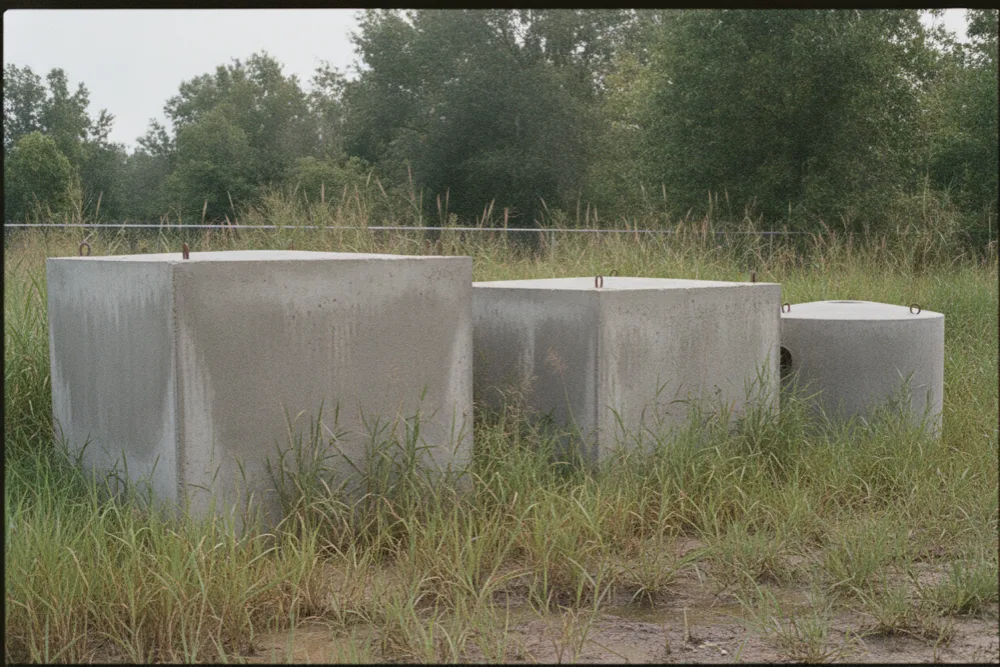
Most households should have the tank pumped and cleaned every 3 to 5 years. Alabama regulates on site sewage systems through the state health department, and its homeowner material is worth ten minutes of your time at the ADPH onsite sewage program.
Tank size sets the pace. A three bedroom home in Coffee or Dale County is usually served by a 1,000 to 1,500 gallon concrete tank. Two people on the larger size may stretch to six or seven years. Six people on the smaller one may need service every two.
Septic tank maintenance is the cheapest part of owning a system. A cleaning every few years costs a small fraction of what a new drain field costs, and it is the only thing that reliably prevents one.
What affects the price of a cleaning around here?
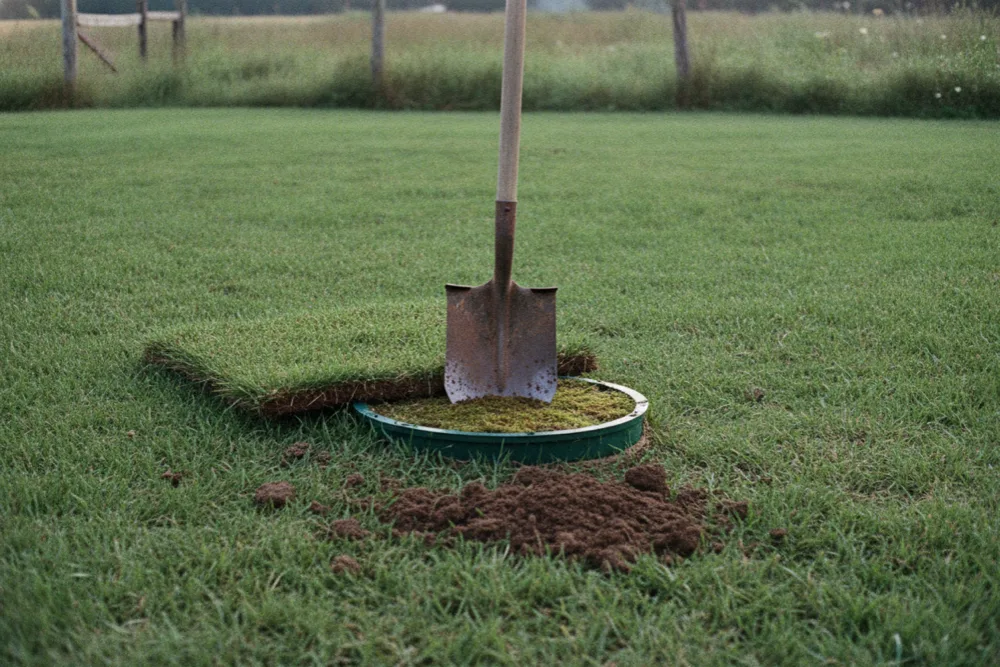
A full residential cleaning in southeast Alabama typically runs about $300 to $600. Anything outside that window usually has a reason attached to it.
- Tank size and how much sludge is actually in there. Hauling and disposal are charged by volume.
- Lid access. A buried lid means digging, every time. Risers installed to grade end that expense permanently.
- Distance. Septic tank service Coffee County crews price partly by drive time, so a place at the end of a long county road runs higher than one just off Rucker Boulevard.
- Condition. Sludge hardened over twelve years takes water, agitation and patience to remove.
Be careful comparing quotes. Some septic cleaning companies advertise a low headline number that covers pumping only, then bill separately for digging, disposal and anything past a set hose length. Ask what is included before anyone drives out to you.
What happens on cleaning day, and after?
Expect one to two hours on site. Clear the drive, keep pets indoors, and leave room for a truck that weighs a great deal more than a pickup.
Go easy on water for the rest of the day. The tank refills from normal use and settles back into its layers within a day or two, and there is nothing you need to add to restart it. The bacteria arrive with every flush.
If the crew finds a broken baffle, a cracked lid or soft concrete, handle it while it is small. Septic tank repairs made during an empty tank visit are far simpler and cheaper than the same fix six months later.
Cleaning day is also the right time to plan ahead. Households in Level Plains and that stretch of Dale County often set a standing three year reminder so the job never turns into an emergency.