Why does a grease trap need pumping at all?
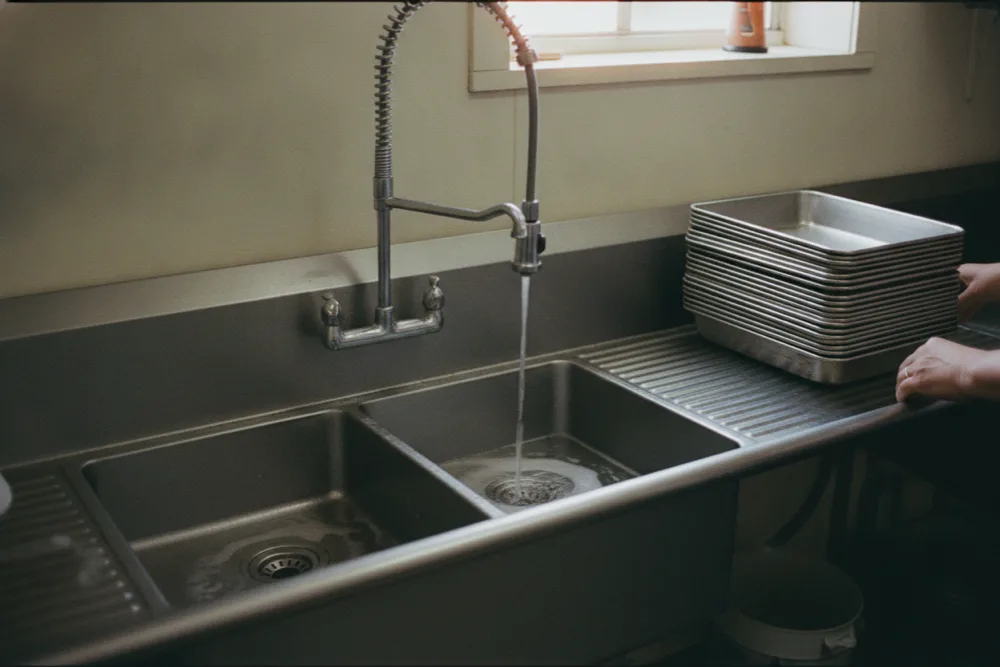
A grease trap is a settling box. Wastewater from sinks, dishwashers and floor drains slows down inside it. Grease and oil float to the top, food solids sink to the bottom, and relatively clean water leaves through the middle.
Nothing in that process destroys the grease. The trap only collects it.
When the two layers grow far enough toward each other, water no longer has room to slow down, and grease heads straight out the outlet into your building line, the city main, or your septic tank and field.
That is when the expensive week starts. A blocked line, a closed kitchen and a repair bill several times the cost of routine service, all from a job that takes under an hour.
How often should you schedule grease trap pumping? Enterprise AL rules of thumb
The widely used standard is to service a trap before grease and solids reach 25 percent of its liquid depth. For most small under sink units that means monthly. For larger outdoor interceptors it usually means every one to three months.
Volume decides the rest. A fryer heavy menu fills a trap far faster than a sandwich shop. A 50 gallon indoor unit fills faster than a 1,000 gallon exterior interceptor. Weekend catering swings the schedule too.
Set the interval by measuring, not by guessing. After two or three services the pattern is obvious and the schedule can be locked in.
If your kitchen sits on a septic system rather than city sewer, keep tank service on the calendar as well, because grease is what shortens a drain field's life fastest. The federal guidance on that is at EPA.gov/septic.
What happens during a grease trap cleaning?
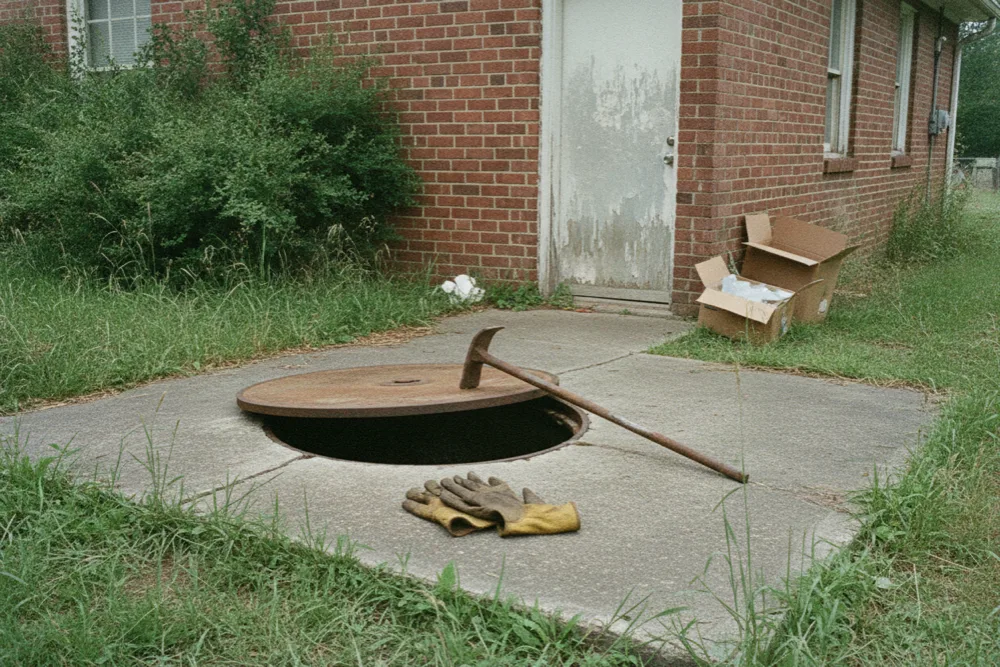
- The lid comes off and the contents are measured, so there is a record of how fast the trap actually fills.
- The full contents get vacuumed out: top grease layer, water and bottom solids together.
- Walls, baffles and the inlet and outlet are scraped and washed so hardened grease is not left behind to seed the next layer.
- Tees and baffle hardware get checked, since a broken baffle lets grease pass straight through a trap that looks fine from above.
- The lid and gasket are reseated and the area is cleaned up.
- You get a service ticket and a manifest showing where the waste went.
A full pump out is the part that matters. Grease interceptor cleaning that leaves the bottom solids in place resets nothing, and you will be calling again in half the usual time.
What does grease trap service cost?
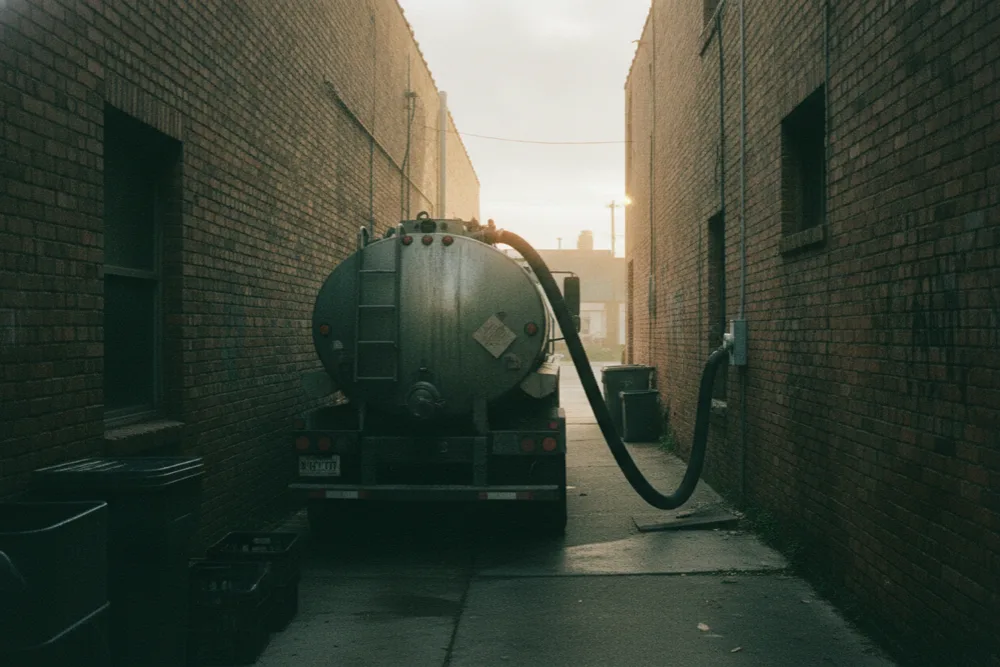
Small indoor units in southeast Alabama typically run about $150 to $350 per service, while larger exterior interceptors commonly land between $300 and $700.
Price follows size, access and schedule. A trap under a three compartment sink is quick work. A 1,500 gallon interceptor behind the building with a parking lot in the way is not.
Traps on a standing route cost less than one off calls, and after hours work always costs more than a Tuesday morning.
Distance counts too. Grease trap pumping cost for a kitchen just off the Boll Weevil Circle comes in lower than for a venue twenty minutes out a county road, purely because of drive time and disposal mileage.
Commercial grease trap service Coffee County wide gets cheaper per stop when several kitchens share a route day.
What records should a kitchen keep?
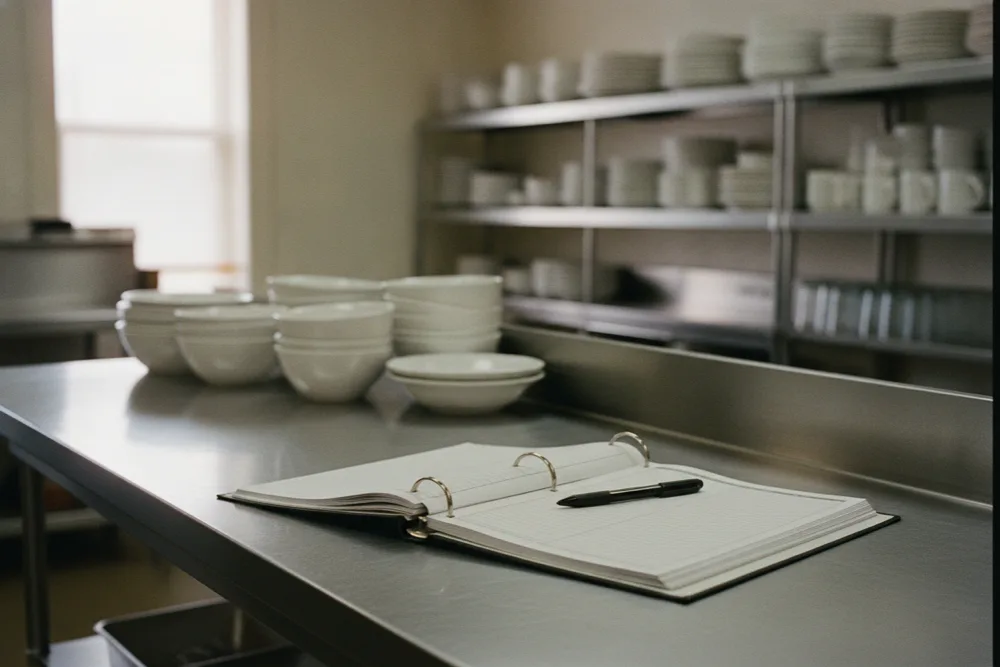
Keep every service ticket and manifest in one folder, on site. Health inspectors and sewer authorities can ask to see them, and a clean file answers the question in ten seconds instead of ten minutes.
Track four things per visit: date, trap size, measured grease and solids depth before service, and where the hauler disposed of the load. That history also proves your interval is measured rather than guessed, which is the argument you want to have on hand.
Kitchens on their own on site systems have a second layer to think about. Alabama regulates on site sewage through the state health department, and commercial systems carry requirements a house does not. Start at the ADPH onsite sewage program.
What can your staff do between services?
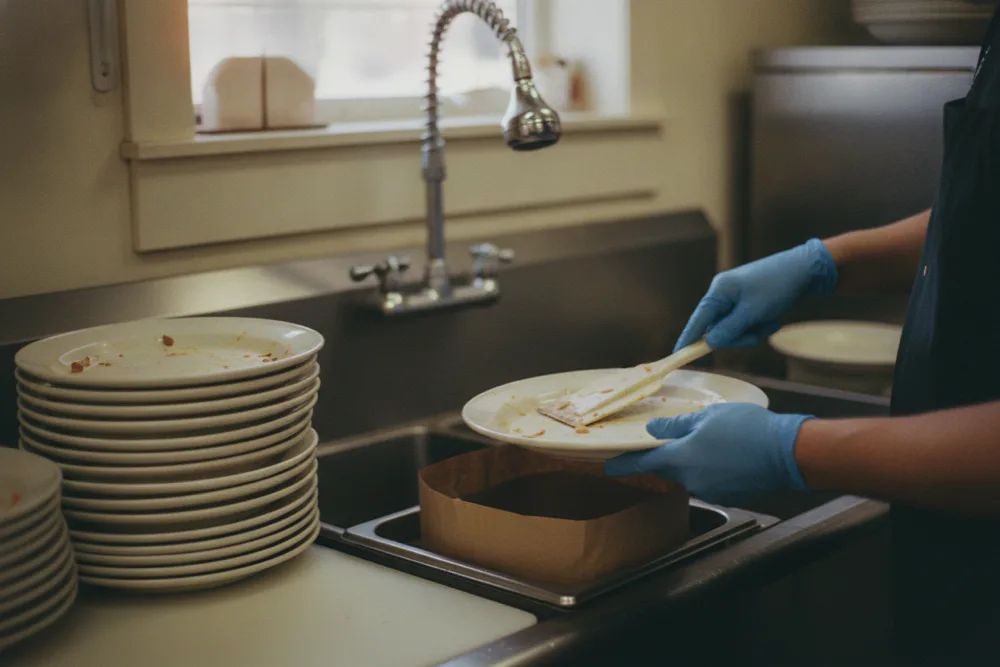
Scrape plates and pans into the trash before anything touches a sink. Most of the grease that reaches a trap could have gone in a bin instead.
Collect fryer oil for recycling. Never pour it down a drain, even hot, and never chase it with hot water. It cools and hardens twenty feet down the line where nobody can reach it without a machine.
Put strainers on every sink and empty them into the trash. Skip enzyme and emulsifier products sold to dissolve grease, because they mostly move the problem downstream and can make a trap look empty while the line fills up.
Post the service schedule where the closing crew can see it. If a trap backs up mid shift, call for after hours help rather than opening the lid and bailing.
Grease trap cleaning restaurants in Daleville and Enterprise can share a route day, and an operation that also runs a house or shop on septic can fold the tank pump out into the same trip.