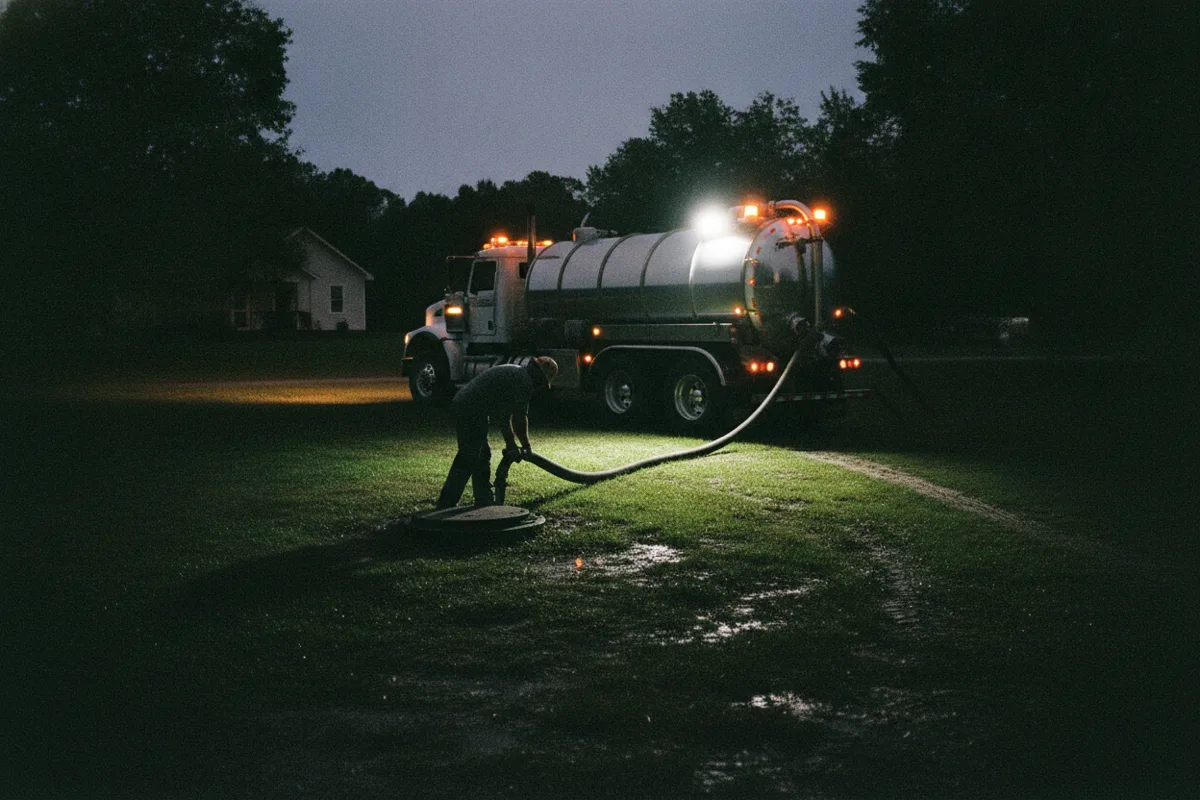
What counts as 24/7 emergency septic service? Enterprise AL situations that cannot wait
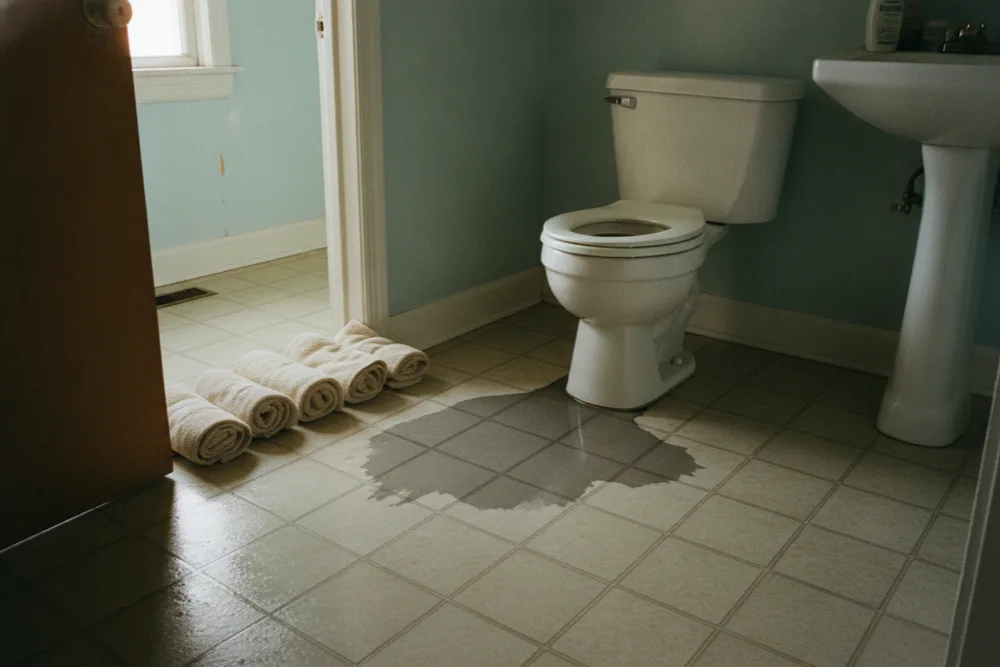
Some septic problems can wait until Tuesday. These are the calls a 24 hour septic service in Enterprise, AL 36330 exists for:
- Sewage backing up into the house through tubs, showers or floor drains.
- Standing sewage in the yard where children, pets or livestock can reach it.
- Every drain in the house stopped at once, with the toilet refusing to clear.
- An alarm sounding on a system with a pump tank while the house is occupied.
- An open or collapsed tank lid, which is a fall hazard and has to be secured immediately.
- A commercial kitchen or a rental property that cannot operate until it drains.
Raw sewage carries bacteria and viruses, so treat any backup as a health hazard and keep people and animals away from it until it is cleaned up properly.
What should you do in the first ten minutes?
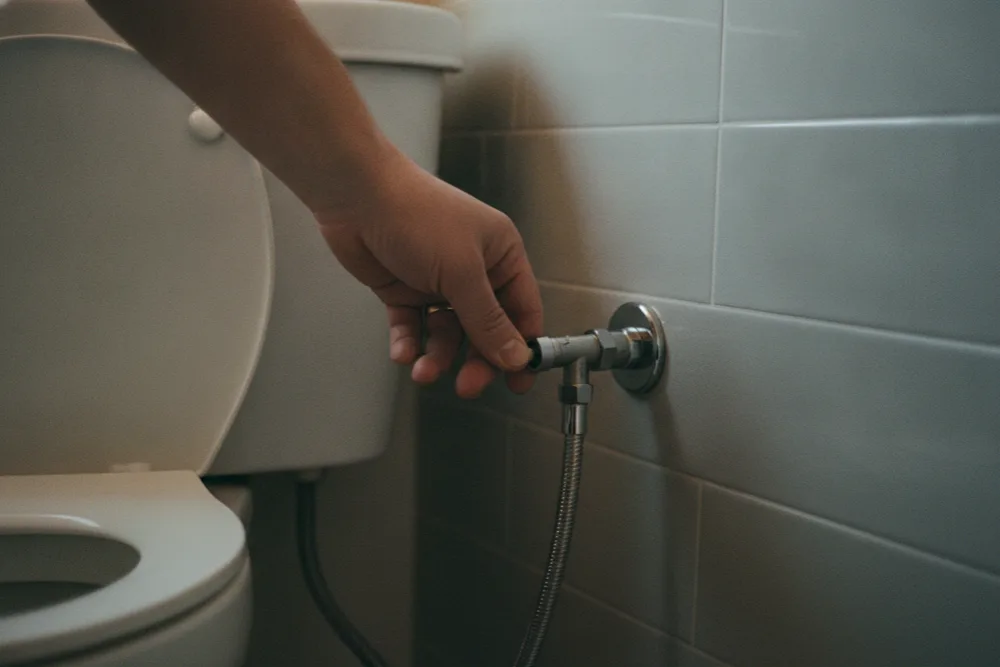
Stop using water. Every flush, every load of laundry and every shower adds to a tank with nowhere to send it. This single step buys more time than anything else you can do.
Keep people and pets out of the affected rooms and off any wet ground outside. Open a window if the smell is strong.
Do not pour drain cleaner into the system. It will not clear a full tank or a saturated field, and it makes the cleanup and the disposal worse.
If you know where the tank lid is, leave it closed. Sewer gas in a confined space is genuinely dangerous, and an open tank tells you very little that a probe cannot tell a tech in two minutes.
Then call. Have the address, the nearest cross street and the last pumping date ready when you do.
Can a septic emergency wait until morning?
Sewage inside the house, standing sewage children or pets can reach, and an open tank lid cannot wait. One slow fixture, a faint outdoor odor or a soft spot in the yard usually can.
That line matters at 2 a.m. on a Sunday, because 24/7 after hours septic service costs real money and half the panicked calls in this business could have been a morning appointment.
The honest triage: if you can stop using water and the sewage stops advancing, you have bought yourself until daylight. Shut the water off, close the bathroom door and put towels down at the threshold.
If the level keeps rising with every fixture off, or a rental or commercial kitchen cannot operate, that is a genuine 24 hour septic call. Say so when you phone and describe what you see, because a dispatcher who knows it is actively flowing will treat it differently.
Holiday weekends deserve their own mention. Thanksgiving is the busiest septic weekend of the year in the Wiregrass, a house full of guests on top of a tank that was due in the spring. If yours is close to due and company is coming, pump it the week before, not the Friday after.
What causes most after hours septic calls?
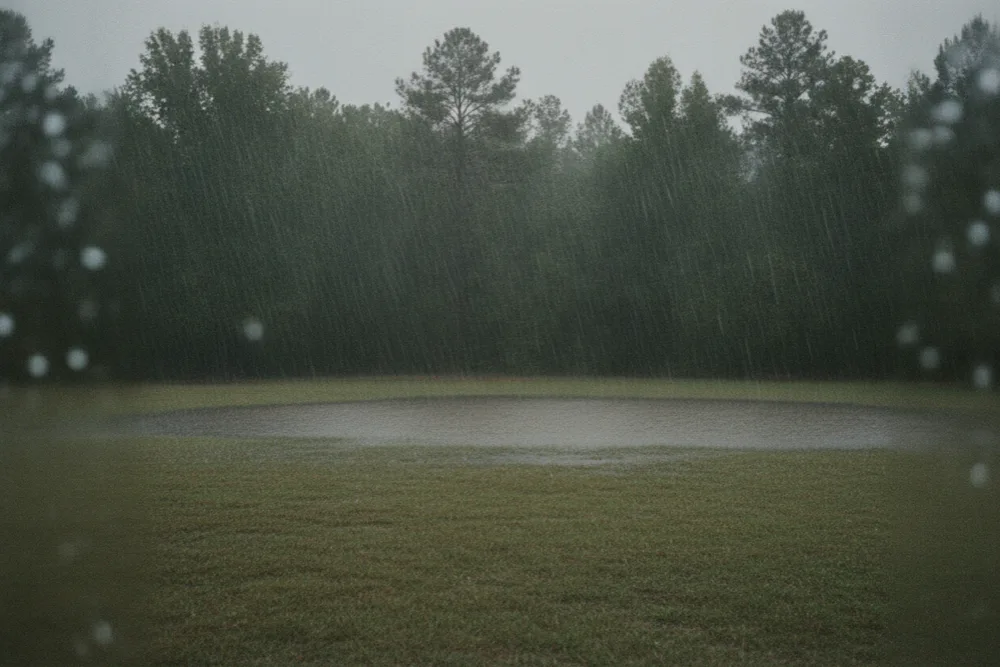
Overdue pumping leads the list by a wide margin. The tank fills, solids reach the outlet and the system chokes. Rain often triggers it, because saturated ground leaves the field nowhere to push water.
The other regulars: a blocked line between house and tank, a failed pump or float, a collapsed baffle, roots in a line, and holiday weekends when a household of four briefly becomes a household of twelve.
Septic backup emergency calls also spike around move in weekends near Fort Novosel, when a house that sat empty for a month suddenly has four people and a washing machine running on day one.
Rental properties in Ozark and across Dale County see that pattern every PCS season.
What does it mean when your septic alarm goes off?
A septic alarm means the water level in your pump tank is higher than it should be. It is a warning, not a countdown, and most systems hold enough reserve for a day of very light water use.
Systems with a pump chamber, common on flat lots and engineered systems around the Wiregrass, use a float and alarm to say the pump has fallen behind. The usual causes are a failed pump, a stuck float, a tripped breaker or a surge of water the pump cannot keep up with.
Do three things. Press the silence button so the household can think. Check the breaker panel for a tripped septic or pump circuit and reset it once. Then cut water use to almost nothing until someone looks at it.
Do not keep resetting a breaker that trips again, that is the pump telling you it has failed. And do not ignore the alarm because the drains still work. The reserve buys you a service call on your schedule instead of sewage on the floor at midnight.
What does a 24/7 emergency septic pump out cost?

Expect roughly $350 to $750 for 24 hour, after hours or same day work in southeast Alabama, against about $300 to $550 for a scheduled visit. The gap is the callout, not the pumping.
| Visit type | Typical southeast Alabama range | What moves the number |
|---|---|---|
| Scheduled pump out | $300 to $550 | Tank size, lid access, drive distance |
| Same day emergency | $350 to $750 | Everything above, plus the callout |
| Night, weekend or holiday | Top of the $350 to $750 range | Crew called in outside normal hours |
Past the after hours premium, the same factors apply as any other job: tank size, whether the lid has to be dug up, and how far the truck travels. Most homes around here sit on a 1,000 to 1,500 gallon concrete tank, and the bigger ones cost more to empty and haul.
A place well off Highway 167 or 84 also costs more to reach at 10 p.m. than a house three minutes from the shop.
Ask for the range on the phone before anyone rolls. A straight answer about 24 hour septic pumping rates is a fair thing to expect, and how someone handles that question tells you a lot about who you just called.
What happens when the truck gets there?
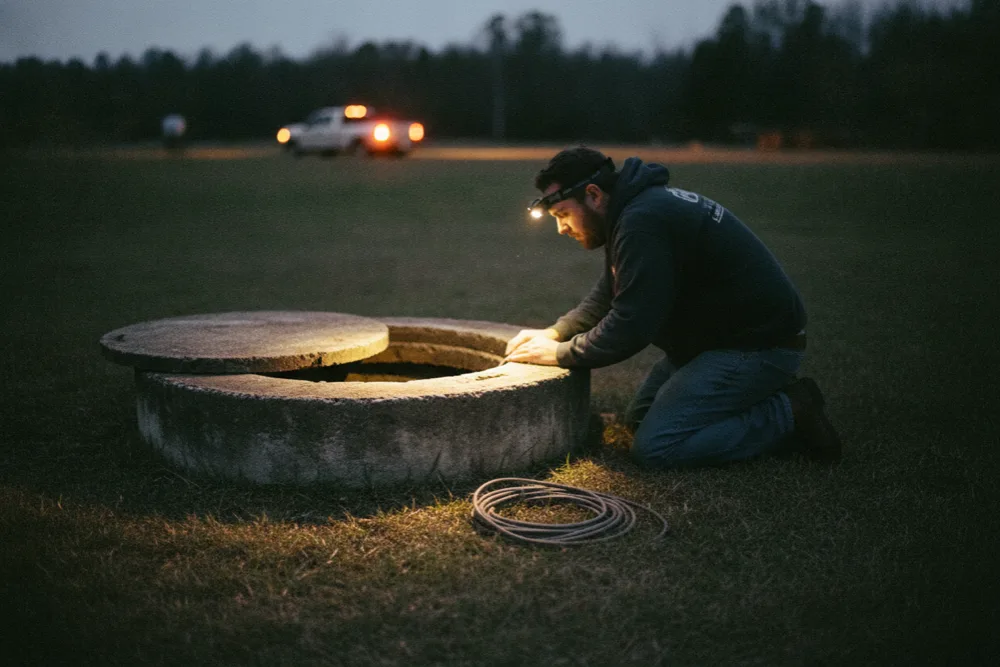
The first job is making the house usable again, which usually means pumping the tank down so the drains work tonight.
While the tank is open, the tech looks for why it happened. Water standing above the outlet points at the field. Clean water in the tank with a blocked inlet points at the line from the house. A silent pump points at electrical or float trouble.
You hear what was found and what it means before anybody leaves, including whether tonight's pumping is the actual fix or just a bridge. If it is a bridge, the follow up is a scheduled septic tank repair visit rather than another late night call.
We answer septic overflow help calls throughout Enterprise and the nearby Wiregrass communities, so response time is a short drive rather than a long one from out of the area.
How fast can 24/7 emergency septic help reach you in the Wiregrass?
In a backup, drive time is the whole game. A 24 hour emergency septic service dispatched from Enterprise, AL beats one routed from across the county, whatever the hour.
An hour's difference in drive time is a lot of mopping.
Emergency septic calls get answered across the same footprint as the scheduled work: Enterprise inside and around Boll Weevil Circle, out Rucker Boulevard toward the Fort Novosel gates, and the corridors that carry commuters home every evening.
That means Highway 84 through Daleville, Highway 167 past Level Plains, Highway 27 out to New Brockton and the farm roads beyond it, and the Highway 231 side around Ozark.
Rural Coffee County and Dale County addresses should say the nearest cross street or landmark when they call. GPS pins wander on county roads, and a driver who knows the area beats a driver squinting at a map after dark.
Does homeowners insurance cover a septic backup?
Usually not, unless you added a water backup endorsement to the policy. Standard homeowners insurance treats the septic system itself as a maintenance item, and backups caused by a full or failed tank are typically excluded.
The water backup rider, often $50 to $100 a year, generally covers damage inside the house from a backup, the flooring, drywall and cleanup. It still does not buy you a new tank or drain field.
If sewage has entered the house, document before you clean. Photograph every room, keep the pumping and repair receipts, and call your agent while the truck is still in the driveway. Coverage questions go better with evidence.
Worth knowing before you ever need it: check your policy tonight, add the rider if it is missing, and keep the service records this page keeps telling you to keep. An adjuster who sees a pumping receipt from two years ago treats the claim differently than one who sees no maintenance at all.
How do you keep from needing this twice?

Get on a pumping schedule and stay on it. Federal guidance puts most households on a 3 to 5 year cycle with a professional look every three years, which you can read at EPA.gov/septic.
Most septic emergencies would have cost a few hundred dollars to prevent, and booking the next pump out before the truck leaves the driveway is the cheapest insurance in this business.
Fix the small stuff. A running toilet can send hundreds of gallons a day into a tank that was never sized for it.
Keep wipes, paper towels, grease and feminine products out of the system entirely. Flushable wipes are not, whatever the box says.
Watch the yard after heavy rain. A field that goes soft every time it storms is warning you months ahead of the failure.
Write the date on a card every time the tank is serviced and tape it inside a cabinet door. The next owner of the house will thank you, and so will you at 9 p.m. on some future Sunday.